

Waterproof Slip On Work Boots: A 2026 Guide
Table of Contents
- Why Waterproof Slip On Work Boots Matter for Tradespeople
- Waterproof vs. Water-Resistant: What You Actually Need
- AS/NZS 2210.3 Safety Standards and What They Mean
- Slip-On Work Boot Stability: How Design Prevents Ankle Roll
- Waterproof Work Boot Maintenance: Keeping Membranes Intact
- Key Features That Separate Durable Boots from Cheap Alternatives
- Choosing the Right Boot for Your Trade and Environment
- Frequently Asked Questions
Last Updated: September 25, 2026
Why Waterproof Slip On Work Boots Matter for Tradespeople
Waterproof slip on work boots are essential for anyone working in wet, muddy, or unpredictable conditions. They combine quick on-off convenience with genuine protection, eliminating the frustration of wrestling with laces when you're already covered in mud or rushing between jobs. For tradespeople, the slip-on design saves time, while waterproofing keeps feet dry and prevents the foot fatigue that comes from soggy socks and cold toes.
A waterproof boot keeps your foot environment stable, reducing blisters, fungal issues, and premature wear from wet-dry cycles.
At RidgeBackboots, we offer a curated selection of high-quality footwear designed for durability and comfort. The Chippy Slip On and Digger Zip Boot both feature slip-resistant outsoles, addressing common concerns about stability on wet surfaces.

Waterproof vs. Water-Resistant: What You Actually Need
A waterproof membrane creates a complete seal; water beads off rather than soaking in. Damp socks lead to blisters, cold feet, and fungal growth.
Water-resistant boots fail in genuinely wet conditions; moisture seeps in within hours, leaving socks clammy and feet uncomfortable.
For slip-on work boots, waterproofing is non-negotiable. You're choosing this style specifically because you need quick access, which usually means wet conditions. A water-resistant slip-on is a compromise that solves neither problem well.
AS/NZS 2210.3 Safety Standards and What They Mean
The standard covers impact protection, compression resistance, and slip resistance on wet and oily surfaces. Steel toe caps meet impact requirements; slip-resistant outsoles are tested against water and oil.
The standard doesn't cover comfort or arch support. A well-designed certified boot adds ankle support, shock absorption, and durable materials beyond minimum thresholds.
When shopping for slip-on work boots, always check for the AS/NZS 2210.3 marking. It's your baseline. Everything else, membrane quality, leather durability, outsole longevity, is what separates a boot that barely passes from one that performs.
Slip-On Work Boot Stability: How Design Prevents Ankle Roll
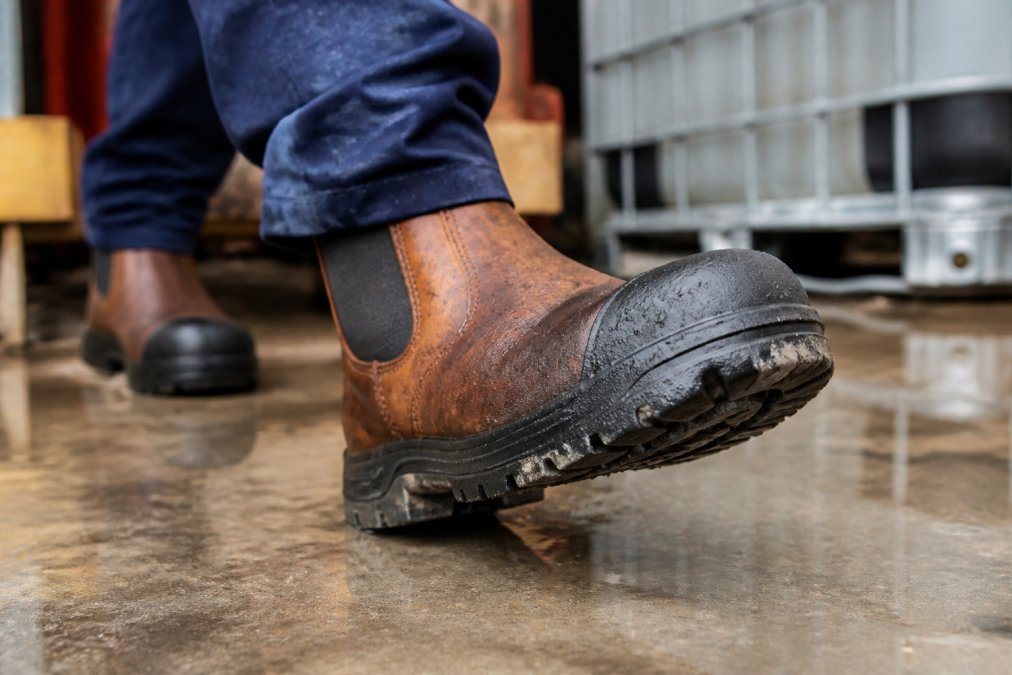
A well-engineered slip-on uses elastic side gussets, a snug heel counter, and shaped insole to keep your foot stable. When properly fitted, the boot grips your foot through compression and geometry.
The key is fit. A slip-on that's too loose will shift. One that's too tight becomes uncomfortable after hours of wear. The wide fit on both the Chippy Slip On and Digger Zip Boot accommodates this: they're designed to sit snugly without requiring constant adjustment. The steel safety toe cap also provides structure, preventing the upper from collapsing inward.

For ankle roll prevention on uneven surfaces, the outsole traction matters as much as the upper fit. A slip-resistant outsole with deep tread grips the ground, preventing your foot from sliding sideways. Combined with a supportive midsole and proper heel counter, this design approach keeps your ankle stable without laces.
Waterproof Work Boot Maintenance: Keeping Membranes Intact
Waterproof membranes degrade if neglected.
Immediate care after each shift:
Seasonal re-treatment schedule:
Recognising membrane failure:
Climate-specific maintenance:
Storage best practices:
Key Features That Separate Durable Boots from Cheap Alternatives
Full-grain leather is more durable than split leather or synthetics; it's thicker and resists scuffing. Cheaper synthetics crack and separate after months of flexing. Look for consistent material thickness.
Quality construction uses tight, consistent stitching (8-12 stitches per inch) in high-stress areas. Poor stitching causes separation under stress.
A proper midsole compresses with each step, reducing foot fatigue and providing traction. Cheap plastic midsoles crack within months.
Finally, the outsole tread pattern should be deep and varied. Shallow tread wears flat quickly and offers poor grip. A varied pattern (not just straight lines) grips different surfaces, wet concrete, muddy ground, oily workshop floors, more effectively.
Choosing the Right Boot for Your Trade and Environment
The best waterproof slip-on boot balances protection, weight, and environmental stressors. Different trades and climates require different priorities.
Construction and carpentry: Impact and puncture protection over weight
Prioritise impact and puncture protection. Steel toe caps are essential; composite alternatives are lighter but offer less protection. Steel-toe boots (600-800g) are heavier than composite (450-600g), increasing fatigue on high-mobility roles but justified for stationary work.
For carpentry, leather uppers resist abrasion from sawdust and rough surfaces better than synthetic.
Agricultural and muddy environments: Waterproofing and easy cleaning
You're working in mud, standing water, and wet grass for extended periods. You need a boot that sheds mud easily and dries quickly between shifts. Slip-on design is ideal here because you can remove boots without tracking dirt inside the house or vehicle. Look for boots with smooth, non-porous uppers (full-grain leather or treated synthetic) that don't absorb mud; textured or suede finishes trap moisture and mud, extending drying time.
Weight is less critical in agricultural work because you're often stationary (milking, fencing, equipment operation) rather than walking long distances. A heavier, more durable boot with aggressive tread is preferable to a lighter boot that wears out quickly in muddy conditions. The tread pattern matters enormously: deep, widely spaced lugs shed mud better than fine or closely packed tread, which clogs with mud and loses grip.
Wet environments: Slip resistance and sustained waterproofing
For plumbing, outdoor work in rainy conditions, or roles involving standing water, slip resistance is non-negotiable. You're standing in water, on wet surfaces, working with slippery materials. A boot with an aggressive tread pattern prevents slips. The outsole should have a varied tread pattern (not just straight lines) that grips wet concrete, tile, and oily workshop floors.
Weight-to-protection analysis across environments:
A general rule: heavier boots (700+ grams) offer more protection and durability but cause measurable foot fatigue over 8+ hours. Lighter boots (under 600 grams) reduce fatigue but sacrifice some impact protection and durability. The break-even point depends on your work pattern:
- High-mobility roles (site supervisors, inspectors, trades moving between multiple locations): prioritise lighter boots (550-650 grams). The reduced fatigue over 8-10 hours of walking outweighs the marginal loss of protection.
- Stationary or semi-mobile roles (equipment operators, plumbers working at a single site, farmers): heavier boots (650-800 grams) are acceptable because you're not walking long distances. The extra protection and durability justify the weight.
- Mixed roles (carpenters, general labourers): mid-weight boots (600-700 grams) offer the best balance. They provide solid protection without excessive fatigue.
Climate-specific recommendations:
For all trades and climates:
Consider weight and comfort as injury prevention, not luxury. A heavy boot causes foot fatigue, which leads to missteps, slips, and lower-back strain over time. The boot should have a comfort insole (both quality slip-on models include this) and shock-absorbing midsole to reduce strain on your feet and lower back. A $150-$180 boot with proper cushioning and support will reduce fatigue-related injuries more effectively than a $80 boot that leaves your feet sore by day's end.
Fit is equally critical. Slip-on boots must fit snugly without being tight; a loose slip-on will shift during work, causing blisters and reducing ankle stability. Measure both length and width before ordering. Many tradespeople find they need a half-size larger in slip-ons than lace-up boots because the fit is tighter without adjustable lacing. If possible, try boots on before purchasing; the difference between a well-fitted and poorly fitted slip-on is dramatic.
Frequently Asked Questions
What is the difference between waterproof and water-resistant work boots?
Waterproof boots use sealed membranes that block water completely, even when submerged briefly. Water-resistant boots repel water but aren't fully sealed and can eventually soak through under heavy rain or mud. For trades involving standing water, mud, or constant wet conditions, waterproof slip on work boots are often sought after. Water-resistant suits lighter moisture exposure.
Do slip-on work boots provide enough stability for construction sites?
Yes, when properly designed. Slip-on work boot stability depends on ankle collar height, outsole traction, and midsole support rather than lacing. Quality slip-on designs include elastic side gussets and reinforced heel counters that prevent ankle roll on uneven ground. The key is fit: boots must be snug around the heel and midfoot. Loose slip-ons reduce stability, but correctly fitted styles perform as well as laced boots on job sites.
How do I maintain the waterproof membrane in my work boots?
Clean boots regularly with a soft brush to remove mud and salt. Dry them naturally away from heat (never near heaters or direct sun). Avoid harsh chemicals and excessive scrubbing. Check seams and stitching for damage. Proper boot maintenance can extend boot life.
Are slip-on work boots compliant with AS/NZS 2210.3 safety standards?
Yes, many slip-on designs meet AS/NZS 2210.3 safety standards if they include steel or composite toe caps, impact-resistant midsoles, and slip-resistant outsoles. The standard doesn't require laces; it specifies protective features and performance thresholds. Always check the product label or description for certification marking. RidgeBackboots' Chippy Slip On and Digger Zip Boot both feature steel safety toes and slip-resistant outsoles, meeting these requirements for construction and trade work.